Custom Mobile Software Development: A Complete Guide to Building Mobile Software for Your Business
Custom Mobile Software Development: A Complete Guide to Building Mobile Software for Your Business
Businesses today rely heavily on mobile technology to communicate with customers, manage operations, process payments, deliver services, and create new revenue streams. While ready-made applications can be useful for basic requirements, many businesses eventually need software designed specifically around their products, customers, workflows, and long-term goals.
This is where custom mobile software development becomes valuable.
Custom mobile software development involves designing and building mobile applications or mobile software specifically for the needs of a particular business, organization, or project. Instead of forcing your business to work around the limitations of an existing application, custom software allows the technology to be built around the way your business actually operates.
From startups launching their first digital product to established companies modernizing their internal systems, custom mobile development can provide greater flexibility, scalability, integration capabilities, and control.
In this guide, we explain what custom mobile software development means, how the development process works, its benefits, costs, technologies, and how to choose the right development approach for your business.
What Is Custom Mobile Software Development?
Custom mobile software development is the process of creating mobile software specifically for a company’s requirements.
Unlike generic applications designed for a broad audience, custom mobile software is developed around specific business objectives. The software can include features, interfaces, integrations, workflows, security systems, and administrative tools selected according to the project’s requirements.
A custom mobile application may be designed for:
- iOS devices
- Android devices
- Both iOS and Android
- Tablets
- Business employees
- Customers
- Partners
- Delivery teams
- Sales teams
- Internal operations
For example, a restaurant may need a custom ordering application, while a logistics company may require software for drivers, dispatchers, customers, and administrators.
A financial company could require a mobile platform with account management, notifications, analytics, and secure authentication.
The key difference is that the software is built around the organization’s requirements rather than the organization adapting to a generic application.
Why Businesses Choose Custom Mobile Software
Many businesses begin with existing software because it is inexpensive and quick to implement. However, as the business grows, limitations can become more obvious.
A generic application may not support a company’s exact workflow. It may also lack important integrations or provide limited customization.
Custom mobile software can address these problems by giving businesses greater control over how their technology works.
1. Software Designed Around Your Business
One of the biggest advantages is that the application can be designed around your existing processes.
Instead of changing your workflow to fit an application, the development team can create features around your workflow.
This can include:
- Custom dashboards
- Customer accounts
- Employee management
- Booking systems
- Payment processing
- Notifications
- Reporting
- Inventory management
- Communication tools
- Analytics
- Subscription systems
- API integrations
2. Better User Experience
User experience is extremely important for mobile applications.
Customers expect applications to be fast, simple, responsive, and easy to navigate.
Custom mobile software allows businesses to create interfaces specifically for their target users.
For example, an application used by professional employees may require a completely different interface from a consumer shopping application.
Developers can design the navigation, screens, buttons, forms, notifications, and workflows around the people who will actually use the software.
3. Greater Flexibility
With custom software, businesses have more flexibility when requirements change.
A company may start with a simple application and later introduce:
- New services
- New payment methods
- Additional user roles
- Advanced analytics
- Loyalty programs
- Subscription features
- AI-powered functionality
- Third-party integrations
Custom software can be developed with future expansion in mind.
4. Scalability
A successful business may eventually have thousands or millions of users.
Software should therefore be designed with scalability in mind.
Custom mobile development allows developers to consider expected growth when selecting the application architecture, database structure, APIs, hosting infrastructure, and other technical components.
This can make it easier to expand the application as the business grows.
Custom Mobile App Development vs. Off-the-Shelf Software
The main difference is flexibility.
Off-the-shelf software is created for a large number of users and businesses. It usually provides standard features that work for many customers.
Custom software is created for a specific organization or product.
|
Custom Mobile Software |
Off-the-Shelf Software |
|
Designed around specific requirements |
Designed for general users |
|
Highly customizable |
Limited customization |
|
Can integrate with existing systems |
Integrations may be limited |
|
Can be expanded over time |
Dependent on provider features |
|
Greater control |
Less control |
|
Custom user experience |
Standard user experience |
|
Can support unique workflows |
Designed around common workflows |
Off-the-shelf software can be an excellent choice when a business has simple requirements.
Custom development becomes more attractive when the business needs unique functionality or greater control.
What Can Custom Mobile Software Do?
Custom mobile software can be used for almost any legitimate digital business requirement.
Some common examples include:
E-Commerce Applications
Businesses can build custom mobile shopping platforms with:
- Product catalogs
- Shopping carts
- Customer accounts
- Payments
- Order tracking
- Discount systems
- Push notifications
- Reviews
- Wishlist functionality
Booking and Appointment Software
Custom booking applications can help businesses manage:
- Appointments
- Reservations
- Staff schedules
- Customer profiles
- Availability
- Payments
- Reminders
- Cancellations
This can be useful for businesses such as salons, clinics, consultants, hotels, fitness providers, and service companies.
Logistics and Delivery Applications
Logistics companies can use mobile software to connect drivers, customers, and administrators.
Features may include:
- Delivery assignments
- Driver accounts
- GPS integration
- Delivery status
- Customer notifications
- Proof of delivery
- Route information
- Administrative dashboards
Internal Business Applications
Not every mobile application needs to be customer-facing.
Businesses can develop private mobile software for employees.
For example, a company may build an application for:
- Employee communication
- Task management
- Field workers
- Sales representatives
- Inventory
- Attendance
- Reporting
- Document management
Internal applications can help organizations digitize processes that previously depended on spreadsheets, email, paper forms, or manual communication.
Native vs Cross-Platform Mobile Development
One of the important decisions in custom mobile software development is choosing the right technology.
There are two common approaches: native development and cross-platform development.
Native Mobile Development
Native development means building an application specifically for a mobile operating system.
For example, developers can create an iOS application using Apple’s native development technologies and an Android application using Google’s Android development technologies.
Advantages of Native Development
Native applications can provide:
- Excellent platform integration
- Strong performance
- Access to platform-specific features
- Highly optimized user interfaces
- Greater control over device functionality
Native development can be particularly useful for applications requiring advanced device functionality or highly optimized performance.
Cross-Platform Mobile Development
Cross-platform development allows developers to build applications that can run on multiple operating systems using a shared codebase or development approach.
Popular technologies include:
- Flutter
- React Native
- .NET MAUI
Cross-platform development can reduce duplicated development work and may be a practical choice for businesses that want to launch on both iOS and Android.
The correct choice depends on the application’s requirements, budget, performance expectations, integrations, and long-term development plans.
The Custom Mobile Software Development Process
Professional mobile development usually follows several stages.
Step 1: Discovery and Planning
The first stage is understanding the project.
Before writing code, developers should determine:
- What problem does the software solve?
- Who will use it?
- What features are required?
- What platforms are needed?
- What systems need to be integrated?
- What is the expected number of users?
- What is the project budget?
- What is the expected launch timeline?
This stage helps prevent expensive changes later.
Step 2: Requirements Analysis
The next stage is turning business requirements into technical requirements.
For example, a business might say:
“We need customers to book appointments through the application.”
The development team can turn that requirement into specific functionality such as:
- Customer registration
- Service selection
- Staff selection
- Calendar availability
- Booking confirmation
- Payment processing
- Email notifications
- Push notifications
- Cancellation functionality
- Administrative management
Detailed requirements make development easier to manage.
Step 3: UX and UI Design
Designers create the structure and appearance of the application.
This can include:
- Wireframes
- User flows
- Navigation
- Screen layouts
- Branding
- Typography
- Buttons
- Forms
- Dashboards
- Mobile responsiveness
The goal is to create an interface that is visually appealing while remaining easy to use.
Step 4: Mobile Software Development
Once the designs and requirements are approved, developers begin implementation.
Depending on the project, this may involve developing:
- Mobile applications
- Backend services
- APIs
- Databases
- Authentication systems
- Payment integrations
- Administrative dashboards
- Notification systems
The frontend is what users interact with, while backend systems can handle data, accounts, business logic, integrations, and other processes.
Step 5: API and Third-Party Integrations
Many modern applications depend on external services.
A custom mobile application might integrate with:
- Payment providers
- Maps
- Email platforms
- SMS services
- CRM systems
- Accounting software
- Analytics platforms
- Cloud services
- Authentication providers
APIs allow different software systems to communicate with each other.
Step 6: Testing
Testing is an essential part of professional mobile software development.
Applications should be tested across supported devices and operating systems.
Testing can cover:
- Functionality
- Performance
- Security
- User interface
- Compatibility
- Authentication
- Payments
- Notifications
- API connections
- Error handling
Testing helps identify problems before customers encounter them.
Step 7: Deployment
After development and testing, the application can be prepared for release.
Depending on the project, deployment may involve:
- App Store submission
- Google Play submission
- Backend deployment
- Cloud infrastructure
- Domain configuration
- Database configuration
- Production monitoring
Internal applications may instead be distributed privately to employees or authorized users.
Step 8: Maintenance and Updates
Launching the application is not necessarily the end of the development process.
Mobile operating systems change, devices change, security requirements evolve, and businesses introduce new features.
Ongoing maintenance can include:
- Bug fixes
- Security updates
- Performance improvements
- Operating system compatibility
- New features
- UI improvements
- Server maintenance
- Database management
A long-term maintenance plan can help keep the software reliable.
How Much Does Custom Mobile Software Development Cost?
The cost of custom mobile software development depends heavily on the project’s complexity.
A basic mobile application with a limited number of screens can cost significantly less than a large platform containing payments, real-time communication, advanced dashboards, multiple user types, and third-party integrations.
Factors that influence development cost include:
Application complexity
Simple applications require fewer development resources than complex platforms.
Number of platforms
Developing for both iOS and Android can increase the project scope compared with supporting one platform.
Number of features
More features generally mean more design, development, testing, and maintenance.
Backend requirements
Applications requiring custom databases, APIs, dashboards, and business logic require additional development.
Integrations
Connecting the application to external platforms can increase development time.
Design requirements
Highly customized interfaces and animations can require additional design and development work.
Security requirements
Applications handling sensitive business or financial information may require additional security controls and testing.
Because every project is different, a professional development company should usually provide a project-specific estimate rather than applying one fixed price to every application.
How to Choose a Custom Mobile Software Development Company
Choosing the right development partner can have a major impact on the success of a project.
Before hiring a development company, consider the following.
Review Their Portfolio
Look at previous applications they have developed.
Pay attention to:
- Design quality
- Functionality
- Performance
- Industry experience
- Platform experience
Understand Their Development Process
A professional development company should be able to explain how the project will move from idea to launch.
Ask about:
- Discovery
- Design
- Development
- Testing
- Deployment
- Maintenance
Ask About Communication
Communication is important during software development.
You should understand:
- Who will manage the project?
- How frequently will you receive updates?
- How are changes handled?
- How will bugs be reported?
- How can you communicate with the development team?
Understand Ownership
Before starting development, clarify who owns:
- Source code
- Application designs
- Database
- Backend
- APIs
- Documentation
- Intellectual property
These details should be clearly defined in the agreement.
Security in Custom Mobile Software Development
Security should be considered from the beginning of development rather than added at the end.
Depending on the application, security measures may include:
- Secure authentication
- Authorization controls
- Encryption
- Secure API communication
- Strong password policies
- Session management
- Input validation
- Secure data storage
- Access controls
- Monitoring and logging
The appropriate security architecture depends on the type of data and functionality handled by the application.
Why Custom Mobile Software Can Be a Long-Term Investment
The biggest advantage of custom software isn’t necessarily the initial launch.
It is the ability to create technology that can evolve with the business.
A company may start with a minimum viable product and later add:
- New customer features
- New markets
- New payment methods
- Additional platforms
- Advanced reporting
- Automation
- AI functionality
- New integrations
- Subscription models
Instead of being restricted by the roadmap of a third-party software provider, the business can control its own product roadmap.
Custom Mobile Software Development for Startups
Startups often need to move quickly while keeping development costs under control.
A common strategy is to build an MVP, or minimum viable product.
An MVP contains the core functionality required to test the business idea.
For example, instead of building a complete marketplace with dozens of features, a startup might initially launch:
- User registration
- Product or service listings
- Search
- Booking or purchasing
- Payment
- Notifications
- Basic administration
Once customers begin using the application, the company can collect feedback and prioritize future features.
This approach can reduce unnecessary development and help validate the business model.
Custom Mobile Software for Established Businesses
Established companies can also benefit from custom mobile development.
Many organizations operate using multiple disconnected systems.
A custom mobile application can provide employees or customers with a single interface for accessing important services.
For example, a business might connect:
Mobile App → API → CRM → Payment System → Database → Admin Dashboard
This creates a more connected digital ecosystem.
Common Mistakes to Avoid
Trying to Build Everything at Once
Adding every possible feature to version one can make development expensive and complicated.
Start with the features that provide the most value.
Ignoring User Experience
A technically powerful application can still fail if customers find it difficult to use.
Simple navigation and clear workflows should be priorities.
Not Planning for Scalability
A small application may work perfectly with a few hundred users but experience problems when usage increases.
Scalability should be considered during architecture planning.
Choosing Technology Only Because It Is Popular
The newest technology is not always the right technology.
The development stack should be selected according to the project’s actual requirements.
Underestimating Maintenance
Software requires ongoing updates.
Businesses should consider maintenance and future development when planning the project budget.
Custom Mobile Software Development Trends
Mobile software development continues to evolve.
Businesses are increasingly exploring technologies such as:
Artificial Intelligence
AI can be incorporated into applications for:
- Recommendations
- Search
- Customer support
- Automation
- Data analysis
- Personalization
Cloud Technology
Cloud infrastructure can support scalable backend systems and remote access.
Mobile Payments
Digital payments continue to be an important component of many mobile applications.
Real-Time Communication
Messaging, notifications, live tracking, and real-time updates are becoming common across many industries.
Advanced Analytics
Businesses can use application data to understand customer behavior and improve decision-making.
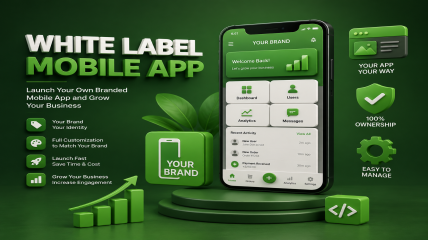
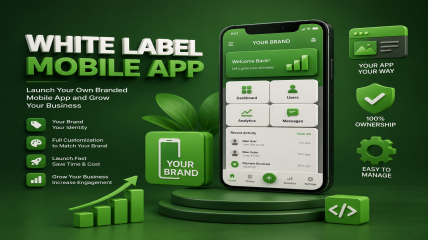
Custom Mobile Software Development vs. White Label Apps
Custom mobile software and white label applications are two different approaches.
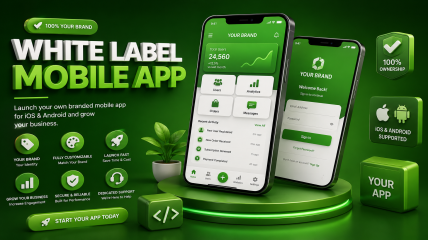
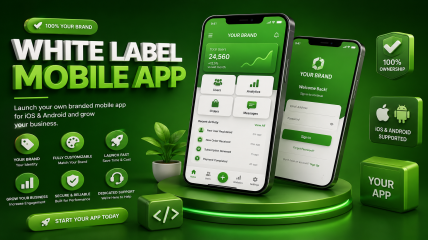
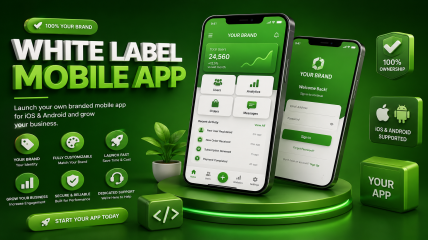
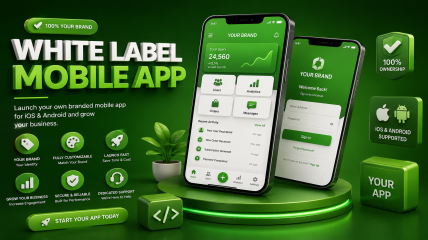
A white label application is generally based on an existing software product that can be branded and customized for different businesses.
This can provide a faster route to launching a mobile product.
Custom software, on the other hand, is developed specifically around your requirements.
White Label
Best suited for businesses that:
- Want faster deployment
- Need standard functionality
- Prefer a lower initial development cost
- Do not require extensive customization
Custom Development
Best suited for businesses that:
- Need unique features
- Require custom integrations
- Want complete control over their product
- Have specialized workflows
- Plan to build a long-term digital platform
Neither approach is automatically better. The right option depends on the business model and technical requirements.
Questions to Ask Before Starting a Custom Mobile Software Project
Before development begins, ask yourself:
What problem are we solving?
Clearly define the business problem.
Who will use the application?
Identify customers, employees, partners, or other users.
What are the essential features?
Separate must-have features from future improvements.
Which platforms are required?
Decide whether the application needs iOS, Android, or both.
Does the application require a backend?
Many applications require servers, databases, APIs, and administrative systems.
What systems need to be integrated?
Identify payment providers, CRM systems, maps, accounting platforms, and other services.
What is the expected budget?
Set a realistic budget based on the scope.
What happens after launch?
Plan for maintenance, updates, security, and future features.
The Future of Custom Mobile Software Development
Mobile software is becoming increasingly important for businesses that want direct relationships with their customers and employees.
As mobile technology continues to develop, businesses can use custom applications to create specialized digital experiences rather than relying entirely on generic platforms.
The future will likely involve more connected applications, intelligent automation, personalized experiences, cloud-based infrastructure, and integrations between mobile software and existing business systems.
For businesses with unique requirements, custom development provides the flexibility to build technology around their specific objectives.
Final Thoughts
Custom mobile software development gives businesses the opportunity to create mobile technology specifically around their products, customers, operations, and goals.
From a simple business application to a complex digital platform, custom software can provide the flexibility needed to create unique functionality, integrate existing systems, improve user experiences, and support future growth.
The most successful projects usually begin with a clear understanding of the business problem rather than simply starting with a list of technical features.
Before development begins, define the target users, essential features, platforms, integrations, budget, security requirements, and long-term goals.
With proper planning, UX design, development, testing, deployment, and ongoing maintenance, custom mobile software can become a valuable long-term asset for a growing business.
If your business has requirements that existing applications cannot properly support, custom mobile software development may be the right approach for turning your idea or workflow into a dedicated mobile solution.