Custom Mobile Software Development: A Complete Guide to Creating Powerful Business Applications
Custom Mobile Software Development: A Complete Guide to Creating Powerful Business Applications
The way people interact with businesses has changed dramatically. Customers want instant access to products and services from their smartphones, while companies need efficient digital tools to manage their operations.
For many organizations, a standard mobile application is enough. But businesses with specialized requirements often need something more flexible.
That is where custom mobile software development comes in.
Custom mobile software allows businesses to create applications specifically around their products, services, employees, customers, and operational processes. Instead of purchasing software with predefined functionality, a company can work with developers to create a mobile solution based on its exact requirements.
From customer-facing applications and e-commerce platforms to internal business tools and complex digital ecosystems, custom mobile development can support a wide variety of use cases.
This comprehensive guide explains what custom mobile software development is, how it works, what it can be used for, the benefits it provides, development costs, and how to plan a successful project.
What Is Custom Mobile Software Development?
Custom mobile software development is the process of creating mobile software specifically for a business, organization, or digital product.
The development process normally starts with an idea or business problem. Developers and designers then transform that requirement into a working mobile product.
Depending on the project, custom development can include:
- Mobile application development
- User interface design
- User experience design
- Backend development
- Database development
- API development
- Cloud infrastructure
- Payment integration
- Authentication
- Notifications
- Analytics
- Administrative dashboards
- Testing
- Deployment
- Ongoing maintenance
The final product can be built for one platform or multiple platforms.
Why Custom Mobile Development Matters
Businesses are different.
A restaurant doesn’t operate like a logistics company. A property management company doesn’t have the same requirements as an online retailer. A startup creating a new marketplace has completely different needs from an internal employee management system.
Standard software tries to satisfy a broad group of customers.
Custom software focuses on one specific business requirement.
This can make it possible to create workflows that would be difficult or impossible to achieve with generic applications.
Custom Software vs Standard Mobile Applications
Before deciding to invest in custom development, businesses should understand the difference between custom and standard software.
Standard Software
Standard software is already developed and offered to many customers.
It can be useful when:
- Requirements are simple
- Common features are sufficient
- Fast implementation is important
- Customization is not a major concern
Custom Software
Custom software is created specifically for a business or product.
It can be useful when:
- The business has unique requirements
- Existing applications are too restrictive
- Custom integrations are required
- Specialized workflows are necessary
- The business wants greater control
Neither option is universally better.
The right choice depends on the company’s goals.
What Can Custom Mobile Software Be Used For?
Custom mobile applications can be developed for almost any legitimate business process.
1. E-Commerce
Businesses can create mobile shopping applications where customers can:
- Browse products
- Search for items
- Add products to a cart
- Make payments
- Track orders
- Save favorites
- Receive notifications
- Manage their accounts
The application can also connect to inventory and order management systems.
2. Booking Applications
Businesses that rely on appointments or reservations can develop custom booking software.
Possible functionality includes:
- Service selection
- Calendar availability
- Staff selection
- Customer accounts
- Booking confirmation
- Payment processing
- Reminders
- Cancellation
- Rescheduling
This can be adapted to the business’s specific booking rules.
3. Delivery Platforms
Delivery companies can create custom software for customers, drivers, and administrators.
A platform could include:
Customer App
Customers request and track deliveries.
Driver App
Drivers receive jobs and update delivery status.
Admin Dashboard
Management monitors orders, users, drivers, and operations.
These components can communicate through a shared backend.
4. Employee Management
Businesses can create private mobile applications for their employees.
Possible features include:
- Attendance
- Scheduling
- Tasks
- Internal communication
- Reports
- Documents
- Customer information
- Field service management
This can make mobile devices useful business tools rather than simply communication devices.
Benefits of Custom Mobile Software
Built Around Your Business
The application can be designed around your actual workflows.
You don’t have to use features that are irrelevant to your business simply because they are included in a standard application.
Better Customer Experience
Custom applications can be designed specifically for your customers.
Developers can simplify important actions and create interfaces that match your brand.
Flexible Development
As your business changes, your software can change with it.
New functionality can be planned according to your future requirements.
Integration With Existing Systems
Custom mobile software can connect to other business systems.
This can include:
- CRM software
- Payment platforms
- Inventory systems
- Accounting software
- Maps
- Email services
- SMS platforms
- Analytics tools
Greater Control
A custom application gives the business more control over the product roadmap.
Instead of waiting for a third-party software provider to introduce a feature, the business can decide what should be developed next.
The Main Components of a Custom Mobile Application
A professional mobile application often consists of several layers.
Frontend
The frontend is what the user interacts with.
This includes:
- Screens
- Buttons
- Menus
- Forms
- Navigation
- Dashboards
Backend
The backend handles application logic and data processing.
It may manage:
- Users
- Orders
- Accounts
- Payments
- Notifications
- Permissions
- Business rules
Database
The database stores information used by the application.
Examples include:
- Customer information
- Products
- Orders
- Appointments
- Messages
- Transactions
API
The API allows different components to communicate.
For example:
Mobile App → API → Backend → Database
External services can also be connected through APIs.
Admin Dashboard
Many business applications require an administrative interface.
Administrators may use a web dashboard to:
- Manage users
- View orders
- Edit products
- Manage bookings
- Send notifications
- Review reports
- Change settings
Choosing the Right Development Approach
Businesses generally need to decide how their application will be developed.
Native Development
Native development focuses on a specific mobile platform.
It can provide strong platform integration and performance.
It may be appropriate for applications that depend heavily on platform-specific capabilities.
Cross-Platform Development
Cross-platform development can allow businesses to create applications for multiple platforms using a shared development approach.
Technologies such as Flutter and React Native are commonly considered for this type of project.
The best option depends on the application’s functionality, performance requirements, development budget, and long-term plans.
How Custom Mobile Software Is Developed
A successful project normally follows a structured process.
Step 1: Understand the Business
Before writing code, the development team needs to understand the company and its goals.
This includes identifying:
- Business problems
- Target users
- Existing systems
- Required functionality
- Project objectives
Step 2: Define the Product Requirements
The idea should be converted into clear requirements.
For example:
“Customers need to book appointments.”
This could become:
- User registration
- Service selection
- Calendar
- Availability
- Booking confirmation
- Payment
- Notifications
- Cancellation
Breaking large ideas into individual requirements makes development easier to manage.
Step 3: Plan the User Experience
The team determines how users will move through the application.
A customer might follow:
Open App → Login → Browse Services → Select Service → Choose Time → Pay → Confirmation
The fewer unnecessary steps, the easier the experience can be.
Step 4: Design the Interface
Designers create the application’s visual appearance.
This can include:
- Branding
- Colors
- Typography
- Icons
- Buttons
- Cards
- Forms
- Navigation
Design should focus on usability as well as appearance.
Step 5: Develop the Application
Developers build the frontend, backend, database, APIs, and integrations.
Depending on the project, different developers may handle different components.
Step 6: Test the Software
Testing is performed to identify problems before users encounter them.
Testing may cover:
- Features
- Performance
- Security
- Device compatibility
- Payments
- Authentication
- APIs
- Notifications
Step 7: Deploy the Product
Once testing is complete, the application can be released.
Deployment can include mobile app store submission, backend deployment, database configuration, analytics, and monitoring.
Step 8: Maintain and Improve
After launch, the software can continue to evolve.
Updates may include:
- New features
- Bug fixes
- Security improvements
- Performance optimization
- Design improvements
- Platform compatibility
How Much Does Custom Mobile Software Development Cost?
One of the most common questions businesses ask is how much custom development costs.
There is no universal price because applications vary significantly in complexity.
A basic application might have only a few screens and simple functionality.
A larger platform may require:
- Multiple applications
- Complex backend systems
- User roles
- Payment processing
- Real-time communication
- Advanced dashboards
- Third-party integrations
- Large databases
These differences can significantly affect the development cost.
Factors That Affect Development Pricing
Features
More functionality generally requires more development time.
Platforms
Supporting iOS and Android can increase project scope.
Design
Custom UX/UI design can affect the overall cost.
Backend
Complex backend systems require additional engineering.
Integrations
Each external service may require additional development and testing.
Security
Projects with higher security requirements may require additional controls and testing.
Maintenance
Ongoing support and updates should be considered as part of the long-term budget.
How to Keep Development Costs Under Control
Custom software does not necessarily need to begin with every feature imaginable.
A better strategy can be to create an MVP.
What Is an MVP?
An MVP, or minimum viable product, is the initial version containing the most important functionality.
For example, a marketplace MVP could contain:
- Registration
- Profiles
- Search
- Listings
- Booking
- Payment
- Notifications
Additional features can be developed later.
This approach can help businesses test demand before making a larger investment.
Security Considerations
Security should be included from the beginning of the project.
Depending on the application’s purpose, developers may implement:
- Authentication
- Authorization
- Encryption
- Secure API connections
- Input validation
- Access controls
- Session management
- Secure storage
- Monitoring
The appropriate security strategy depends on the application’s data and functionality.
Testing Across Devices
Mobile software needs to work across the devices that the business supports.
Testing may include different:
- Screen sizes
- Operating system versions
- Hardware capabilities
- Network conditions
Testing on real devices can help identify issues that aren’t always visible during development.
Why Maintenance Is Important
A mobile application isn’t finished forever when it launches.
Mobile operating systems receive updates.
Devices change.
Security requirements evolve.
Customers request new features.
Businesses change their processes.
Regular maintenance helps keep the application functional and compatible.
Maintenance may include:
- Bug fixes
- Security updates
- OS compatibility
- Backend updates
- Performance optimization
- New functionality
Custom Mobile Software for Startups
Startups often have limited resources and need to validate their ideas quickly.
Custom development can still work well if the project is carefully scoped.
Rather than building a large platform immediately, the startup can focus on the core user journey.
For example:
Problem → MVP → Launch → User Feedback → Improvements → Growth
This approach allows the company to learn from actual users before investing heavily in advanced functionality.
Custom Mobile Software for Growing Companies
As companies grow, their software requirements often become more complicated.
A business may eventually need:
- Multiple user roles
- Advanced reporting
- Automated workflows
- Additional integrations
- Customer portals
- Employee applications
- Advanced analytics
Custom software can evolve alongside these requirements.
How to Select a Mobile Software Development Company
Choosing a development partner should involve more than comparing prices.
Look for evidence of:
Relevant experience
Have they built similar software?
Strong development practices
Do they have a structured development process?
Communication
Can they provide consistent project updates?
Technical capability
Can they handle frontend, backend, APIs, databases, testing, and deployment?
Post-launch support
Will they maintain the application after release?
Clear agreements
Are project scope, deliverables, ownership, and payment terms clearly documented?
Questions to Ask Before Hiring Developers
Before signing a development agreement, ask:
- What technologies will be used?
- Which platforms will be supported?
- Who owns the source code?
- What is included in the development price?
- How will changes to the project be handled?
- What testing is included?
- Who manages deployment?
- Is maintenance available after launch?
- How are security requirements handled?
- What happens if the project scope changes?
These questions can help establish realistic expectations.
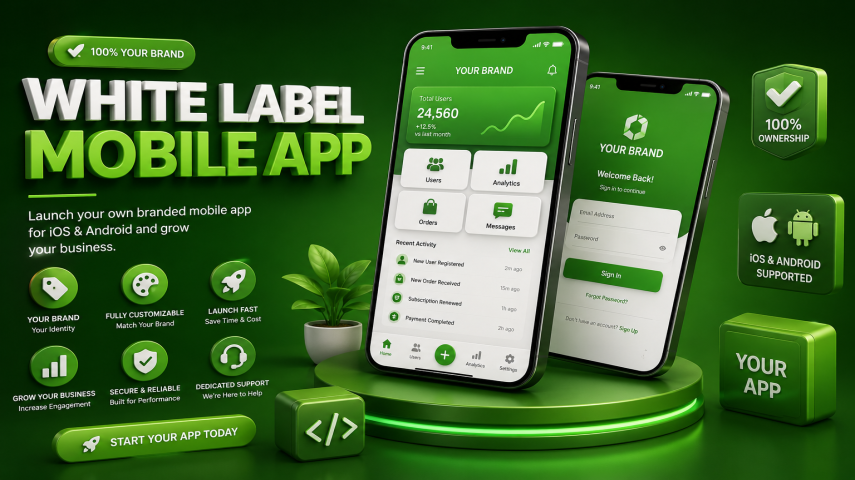
Custom Development or White Label?
Businesses sometimes have to choose between custom development and white label software.
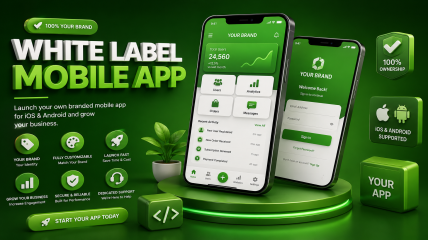
A white label solution can provide a quicker way to launch because much of the underlying software already exists.
Custom development takes longer but provides more control.
Choose white label when:
- Speed is the priority.
- Your requirements are relatively standard.
- You want to launch with existing functionality.
- Extensive customization isn’t necessary.
Consider custom development when:
- Your business has unique requirements.
- You need specialized workflows.
- Existing software doesn’t integrate with your systems.
- You need complete control over the product.
- You want to build a unique digital platform.
Future Trends in Mobile Software Development
The mobile software industry continues to evolve.
Businesses are increasingly exploring:
Artificial Intelligence
AI can support applications through recommendations, automation, search, personalization, and customer support.
Cloud Infrastructure
Cloud services can provide scalable infrastructure for growing applications.
Real-Time Features
Live notifications, messaging, tracking, and status updates are increasingly common.
Digital Payments
Mobile payment functionality is becoming an important component of many commercial applications.
Data Analytics
Businesses can use application data to better understand customers and improve their services.
Is Custom Mobile Software Right for Your Business?
Custom development isn’t automatically the best option for every company.
It may be worth considering if:
- Your current software is limiting growth.
- You have a unique business process.
- You need custom integrations.
- Your customers need a specialized experience.
- You want to create a new digital product.
- You need an internal mobile platform.
- You want greater control over your technology.
If an existing application already meets your needs, purchasing that software may be more practical.
The objective should always be to select the solution that makes the most sense for the business.
Final Thoughts
Custom mobile software development gives businesses the ability to create mobile solutions around their exact requirements.
Instead of relying entirely on generic applications, companies can build software specifically for their customers, employees, operations, and business objectives.
A successful project starts with a clear problem and a well-defined product strategy. From there, the process can move through UX design, UI design, development, backend engineering, integrations, testing, deployment, and maintenance.
Businesses should also think beyond the initial launch. A strong mobile product should have room to evolve as customer expectations, technology, and business requirements change.
Whether you’re a startup building a new product or an established company looking to modernize your operations, custom mobile software can provide the flexibility needed to create a digital solution that fits your business.
The most important question isn’t simply “How much does a mobile application cost?”
It is:
“What should our mobile software accomplish, and how can we build it in a way that creates long-term value?”
Once that question is answered, the right development strategy becomes much easier to define.