White Label Mobile Apps: How to Launch Your Own Branded App Business in 2026
White Label Mobile Apps: How to Launch Your Own Branded App Business in 2026
The mobile app industry is changing quickly.
Businesses want their own apps, customers expect convenient mobile experiences, and agencies are looking for new ways to generate recurring revenue. At the same time, not every company has the budget, developers or technical resources required to build a mobile application entirely from scratch.
This is where white label mobile apps can provide an attractive solution.
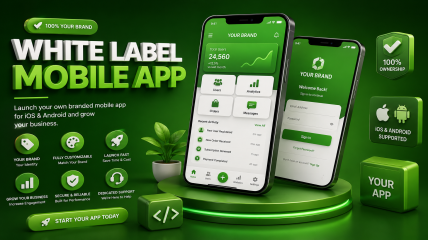
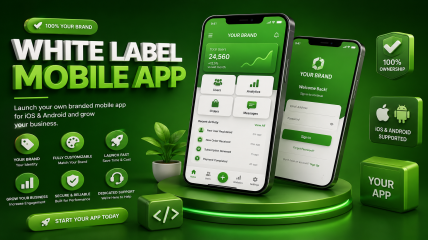
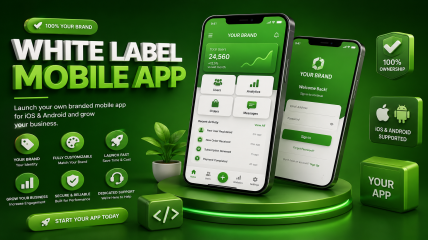
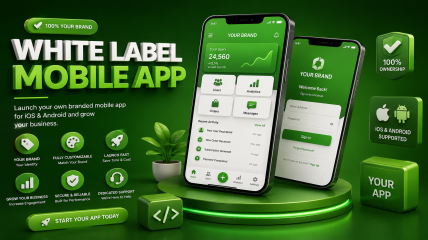
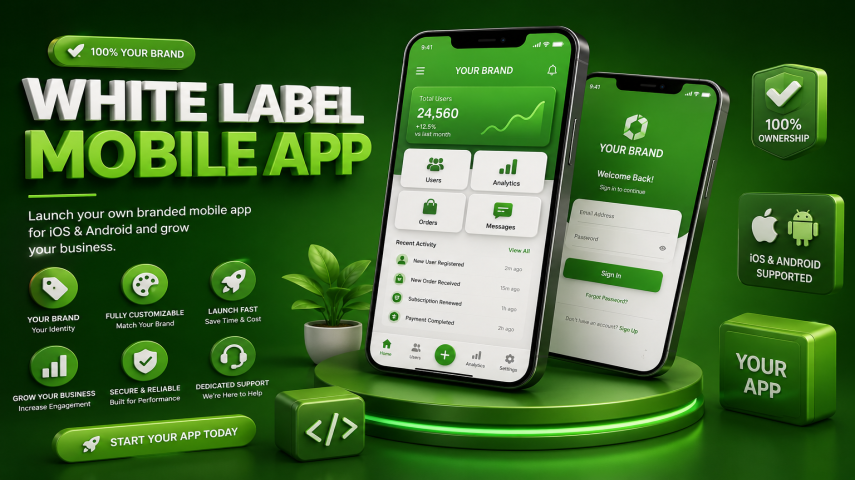
A white label mobile app allows a company, agency or entrepreneur to use an existing mobile application platform, customize it with their own branding and offer the finished product to customers.
Instead of spending months developing every component, businesses can start with an established foundation and focus on branding, customer experience, marketing and growth.
In 2026, white-label mobile applications are becoming particularly interesting for agencies, SaaS businesses, entrepreneurs and companies that want to create mobile products more efficiently.
What Is a White Label Mobile App?
A white label mobile app is a mobile application developed using an existing technology platform that can be branded and customized for another business.
The original technology provider develops and maintains the underlying platform, while the business using the white-label solution can present the application under its own identity.
Depending on the provider, customization may include:
- Company logo
- App name
- Brand colours
- App icon
- Images
- Text
- Navigation
- Products
- Services
- Payment options
- Customer accounts
- Notifications
- Business information
The result is a branded mobile application designed around the company’s customers.
Why Are Businesses Interested in White Label Apps?
Developing an app from scratch can be complicated.
A traditional mobile development project may involve:
- UX designers
- UI designers
- iOS developers
- Android developers
- Backend developers
- Database engineers
- QA testers
- DevOps specialists
- Security specialists
- Project managers
After launch, the business still needs to maintain the application.
Operating system updates, security patches, bugs, new features and infrastructure can require continuous investment.
A white-label solution can reduce some of this complexity by providing a reusable technical foundation.
This allows businesses to concentrate more heavily on the things that matter to them:
Customers, branding, sales and growth.
White Label Mobile App Development vs Custom Development
There are two major approaches to building a mobile application.
Custom Mobile App Development
With custom development, the application is created specifically for the business.
This provides maximum flexibility.
A company can decide:
- How the application works
- What features it contains
- How the backend is structured
- Which APIs it uses
- How the database operates
- How the interface behaves
The disadvantage is that custom development can require considerably more time and resources.
White Label Mobile App Development
With white-label development, an existing application foundation is customized.
The business may receive:
- Faster development
- Lower initial complexity
- Existing functionality
- Reusable infrastructure
- Easier deployment
- Ongoing platform updates
The trade-off is that customization may not be unlimited.
Therefore, businesses should carefully evaluate the platform before committing.
Who Can Use White Label Mobile Apps?
White-label technology is suitable for many different types of businesses.
Digital Marketing Agencies
Agencies can add mobile app development to their existing services.
For example, an agency already offering SEO and social media marketing could also offer branded mobile applications.
Web Development Companies
Web development businesses can expand their services from websites to mobile apps without necessarily creating an entirely new development department.
Entrepreneurs
Entrepreneurs can build a business around selling mobile applications to specific industries.
SaaS Companies
Software companies can integrate mobile applications into their existing SaaS products.
Small Businesses
Small businesses can create their own branded applications without undertaking a large custom development project.
E-Commerce Businesses
Online stores can use mobile apps to improve customer engagement and provide another sales channel.
The White Label App Agency Model
One of the most attractive opportunities is the agency model.
Imagine an agency that provides websites to local businesses.
Instead of only selling:
Website + SEO
the agency could offer:
Website + SEO + Mobile App + Marketing
The mobile application could be powered by a white-label technology provider.
The agency can then focus on:
- Finding customers
- Designing the branding
- Managing relationships
- Marketing
- Sales
- Customer support
The technical provider handles the agreed development infrastructure.
This creates an opportunity for agencies to increase the value of each customer.
How the White Label Reseller Model Works
The reseller model is relatively straightforward.
Step 1 — Choose a Provider
Find a white-label platform that allows commercial use and resale.
Step 2 — Create Your Brand
Develop your own business identity.
Step 3 — Select Your Target Market
Instead of targeting everyone, focus on a specific industry.
Examples include:
- Restaurants
- Gyms
- Salons
- Real estate companies
- Schools
- Coaches
- Retailers
- E-commerce businesses
- Professional services
Step 4 — Create Packages
You can create different service levels.
For example:
Starter
Basic branded mobile app.
Professional
Branded app plus advanced features and integrations.
Enterprise
Advanced customization, integrations, analytics and dedicated support.
Step 5 — Acquire Customers
Use:
- SEO
- Google Ads
- Social media
- Email marketing
- Cold outreach
- Partnerships
- Referrals
Step 6 — Customize the App
Apply the customer’s branding and configure the required features.
Step 7 — Launch
Prepare the application for distribution and complete the required publishing process.
Step 8 — Offer Ongoing Services
The relationship does not have to end after launch.
You can provide:
- Maintenance
- Updates
- Hosting
- Support
- Marketing
- Analytics
- Feature development
This is where recurring revenue can become important.
Can a White Label Mobile App Business Generate Recurring Revenue?
Yes.
A major advantage of the white-label model is that businesses can potentially sell ongoing services rather than relying exclusively on one-time development fees.
For example, a business could charge customers for:
Initial setup
plus
Monthly platform fee
plus
Maintenance
plus
Marketing
plus
Premium features
This creates multiple potential revenue streams.
The exact pricing depends on the market, provider costs and services offered.
White Label Mobile Apps and SaaS
White-label mobile apps can also form part of a broader SaaS business.
SaaS stands for Software as a Service.
Instead of selling software once, customers typically pay for access over time.
A company could combine:
- Web dashboard
- Mobile application
- Cloud infrastructure
- Customer accounts
- Subscription billing
- Analytics
- Automation
The mobile application becomes part of the overall SaaS experience.
This can be especially valuable for businesses that want customers to access their services from both desktop and mobile devices.
AI Is Changing White Label Mobile Apps
Artificial intelligence is one of the biggest technology trends influencing mobile applications.
A modern white-label platform may increasingly incorporate AI features such as:
AI Chat Assistants
Customers can ask questions and receive automated responses.
AI Recommendations
The application can recommend products, content or services.
AI Search
Users can search using natural language.
AI Automation
Businesses can automate repetitive tasks.
Personalization
The app can adapt content or recommendations based on customer behaviour.
AI Content Generation
Businesses can use AI to assist with creating certain types of content.
However, AI should not be added simply because it is trending.
The best AI features solve a real problem.
White Label Mobile Apps for E-Commerce
E-commerce is one of the strongest use cases for branded mobile apps.
An online store can potentially use an app for:
- Product browsing
- Shopping carts
- Checkout
- Customer accounts
- Order tracking
- Promotions
- Loyalty rewards
- Push notifications
A mobile app can give an online business another direct communication channel with its customers.
Instead of relying entirely on search engines or social media platforms to reach customers, the business can encourage customers to install its app and return directly.
White Label Apps for Restaurants
Restaurants can use branded apps for:
- Online ordering
- Reservations
- Menus
- Loyalty programmes
- Discounts
- Delivery
- Customer notifications
A restaurant app can also help create a direct relationship between the restaurant and its customers.
White Label Apps for Gyms and Fitness Businesses
Fitness businesses can use mobile apps to manage:
- Memberships
- Classes
- Bookings
- Workout plans
- Payments
- Notifications
- Customer profiles
A gym could also use its app as a central location for members to access services.
White Label Apps for Professional Services
Professional service companies can use applications for:
- Appointments
- Customer communication
- Payments
- Documents
- Notifications
- Account management
This can be particularly useful when customers frequently interact with the business.
Important Features to Look For
Before choosing a white-label platform, create a feature checklist.
Branding
Can you completely customize the visual identity?
Push Notifications
Can businesses send notifications directly to customers?
Payments
Does the platform support the payment system you need?
User Accounts
Can customers register and manage their information?
Analytics
Can you see how customers are using the application?
Admin Dashboard
Can the business manage content without contacting the developer for every change?
API Integrations
Can the app connect with external systems?
iOS and Android
Can the application support the platforms your customers use?
Scalability
Can the infrastructure handle growth?
Security
How is customer information protected?
What About App Store Publishing?
Publishing is an important part of mobile app development.
Before choosing a provider, ask:
- Who creates the Apple developer account?
- Who creates the Google Play developer account?
- Who owns the accounts?
- Who submits updates?
- Who manages app-store compliance?
- What happens if the contract ends?
Ideally, businesses should understand these responsibilities before signing an agreement.
White Label Mobile App Pricing
There is no universal price for a white-label mobile app.
Pricing can depend on:
- Platform
- Features
- Number of apps
- Number of users
- Customization
- Integrations
- Hosting
- Support
- Maintenance
- AI features
- App-store services
A basic branded application may be relatively inexpensive compared with a highly customized enterprise application.
When comparing providers, calculate the total cost over one, three and five years rather than looking only at the initial price.
Questions to Ask a White Label Provider
Before purchasing, ask the provider:
Do I have the right to resell the application?
This is essential if you plan to sell apps to clients.
Can I use my own branding?
Confirm exactly what can be branded.
Do I own the source code?
This can affect your long-term independence.
Who owns the customer data?
Make sure the agreement clearly explains data ownership and access.
Can I export my data?
This can become important if you change providers.
What happens if I cancel?
Understand what happens to the applications, accounts and data.
How are updates handled?
Find out who maintains the software.
Is technical support included?
Determine what is included in your subscription or development package.
Common Mistakes When Starting a White Label App Business
Choosing Too Many Niches
Trying to serve every industry can make marketing difficult.
Start with one market.
Competing Only on Price
A cheap app is not necessarily a valuable app.
Compete through:
- Service
- Branding
- Support
- Features
- Industry knowledge
- Customer experience
Ignoring Customer Acquisition
The technology is only one part of the business.
You also need a strategy for finding customers.
Not Understanding Licensing
Always confirm that your agreement permits the business model you want to operate.
Overbuilding
Do not create dozens of features before you know what customers actually need.
Launch a focused first version and improve it based on feedback.
How to Market a White Label Mobile App Service
SEO can be particularly useful because businesses actively search for solutions.
A website targeting this market can create pages around keywords such as:
- White label mobile app
- White label mobile app development
- White label app development
- White label app builder
- White label app for agencies
- White label app reseller
- Branded mobile app
- Mobile app development for agencies
- White label SaaS app
- Custom branded mobile app
- Mobile app reseller
- AI mobile app development
Instead of publishing hundreds of unrelated articles, build a topic cluster.
Your main pillar page can target:
White Label Mobile App
Then create supporting pages targeting specific questions and industries.
Example White Label Mobile App Content Cluster
Pillar
White Label Mobile App: Complete 2026 Guide
Supporting Articles
What Is a White Label Mobile App?
How Much Does a White Label Mobile App Cost?
White Label App Development for Agencies
How to Start a White Label App Reseller Business
White Label App vs Custom App Development
Best White Label App Features for Small Businesses
AI White Label Mobile Apps: What Businesses Need to Know
How to Launch a Branded Mobile App
White Label Mobile Apps for Restaurants
White Label Mobile Apps for Gyms
White Label Mobile Apps for E-Commerce
These pages can internally link to one another and back to the main pillar article.
The Future of White Label Mobile App Development
The white-label model is likely to become more sophisticated.
The future is unlikely to be simply:
“Put your logo on this app.”
Instead, businesses will expect:
Branding + customization + AI + automation + analytics + integrations + scalability.
White-label providers will increasingly compete on the quality of their technology, customization options and business support.
Agencies will also have more opportunities to package mobile applications with other digital services.
This means the white-label mobile app industry could become increasingly specialized.
Instead of one generic application for everyone, businesses may choose platforms designed specifically for their industry.
Is a White Label Mobile App Right for Your Business?
A white-label application can be a strong choice if your priority is:
- Speed
- Branding
- Lower development complexity
- Standard business functionality
- Cross-platform availability
- Easier maintenance
- Business scalability
Custom development may be better if you require highly specialized functionality or complete control over the underlying technology.
The right choice ultimately depends on your business model, budget, technical requirements and long-term goals.
Final Thoughts
The opportunity surrounding white label mobile apps in 2026 extends far beyond simply launching an application.
For businesses, a white-label app can provide a faster route to creating a branded mobile experience.
For agencies, it can become a new service offering.
For entrepreneurs, it can form the foundation of a reseller business.
For SaaS companies, it can provide a mobile component for an existing software platform.
And with AI, automation, analytics and personalization becoming increasingly important, the capabilities of white-label applications are continuing to evolve.
The most successful businesses will not simply ask:
“Can I get a white label app?”
They will ask:
“How can I use a branded mobile application to create a better customer experience and build a scalable business?”
That is the real opportunity behind white label mobile app development.
Frequently Asked Questions
What is a white label mobile app?
A white label mobile app is an existing or reusable application platform that can be customized and branded for another company.
Can I sell a white label mobile app to clients?
Yes, provided your provider’s licensing agreement allows commercial resale or white-label services.
How much does a white label mobile app cost?
Costs vary depending on features, customization, platform fees, integrations, support and maintenance.
Can I put my own company name on the app?
Yes. Branding is a core part of white-label development, although the exact customization options depend on the provider.
Can agencies use white label mobile apps?
Yes. Agencies can use white-label technology to expand their services and potentially create recurring revenue through app management and support.
Can white label apps include AI?
Yes, depending on the platform. AI chat, automation, recommendations and personalization are examples of features that can be integrated.
Are white label apps suitable for startups?
They can be. Startups can use them to launch and test an idea before investing in extensive custom development.
What should I check before buying a white label app?
Check licensing, ownership, source-code access, data ownership, customization, pricing, support, security, integrations, scalability and what happens if you cancel.
Is white label app development the same as custom app development?
No. White-label development uses an existing technology foundation, while custom development builds the application specifically for the business.
Can I build a recurring-revenue business with white label apps?
Potentially. Businesses can combine initial setup fees with monthly subscriptions, maintenance, hosting, support, marketing and premium features.